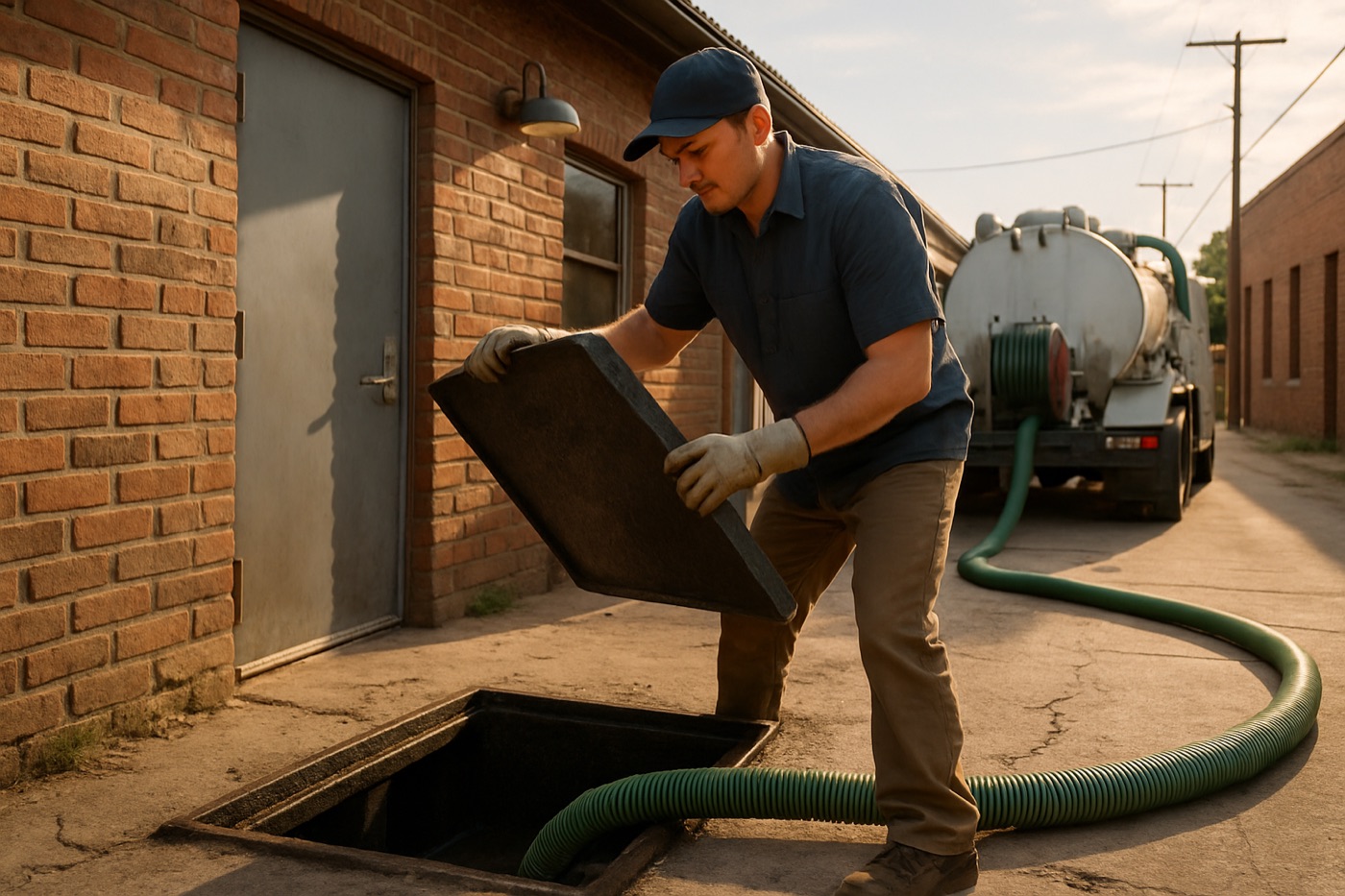
Kyle's restaurant boom has a grease problem
Every new restaurant row along I-35, FM 1626, and Kyle Parkway means more kitchens pushing fats, oils, and grease (FOG) at aging lines. Municipalities in the area require grease interceptors on commercial kitchens and expect them serviced on a schedule — and when a blocked city main gets traced back to a trap that hasn't been pumped since spring, the fines and the cleanup bill land on the restaurant.
The 25% rule
The industry and most Texas jurisdictions work off the "25% rule": when combined grease and solids reach a quarter of the trap's liquid depth, it's due. For most full-service kitchens that works out to pumping every 30–90 days; high-volume fryer operations trend monthly, low-grease concepts can stretch longer. An under-pumped trap doesn't just risk fines — it quietly stops working, passing grease downstream until your own lines choke, usually on a Friday night.
What service includes
Full evacuation of the trap (not skimming the mat off the top), scraping the walls and baffles, checking inlet/outlet tees, and hauling to a licensed disposal facility — with a manifest documenting the service for your compliance file. Keep those manifests; they're the first thing asked for after any FOG-related line issue, and a clean paper trail ends those conversations quickly.
Indoor traps and outdoor interceptors
Small under-sink traps (20–50 gallons) in older or smaller kitchens need more frequent, cheaper service; large outdoor in-ground interceptors (750–1,500+ gallons) at newer builds get pumped by truck on longer cycles. Typical Kyle–Buda pricing runs $175–$350 for indoor traps and $300–$650 for outdoor interceptors per service, volume-dependent. Lock in a route schedule and you'll pay the low end and never think about it again.
Common questions
How often does a restaurant grease trap need to be pumped in Texas?
Most jurisdictions apply the 25% rule — service when grease and solids reach 25% of the trap's depth. In practice that's every 30–90 days for most full-service kitchens, monthly for heavy fryer use.
What records do I need to keep?
Keep the manifest from every service — it documents the date, volume, hauler, and disposal site. It's your proof of compliance if the city traces a FOG blockage or the health inspector asks.
Can I pour fryer oil into the grease trap?
No. Used fryer oil should go into a separate collection container (renderers often pay for it or haul it free). Dumping it down the drain overwhelms the trap and shortens your service cycle dramatically.
What does grease trap service cost in Kyle?
Typically $175–$350 per service for indoor under-sink traps and $300–$650 for outdoor in-ground interceptors, depending on size and condition. Scheduled route service prices lower than on-demand calls.
Get a fast quote
Tell us what's going on. A local septic pro will call you back — usually the same day, often within the hour.
Got it — you'll get a call back shortly. If this is an active overflow, stop running water in the meantime.